
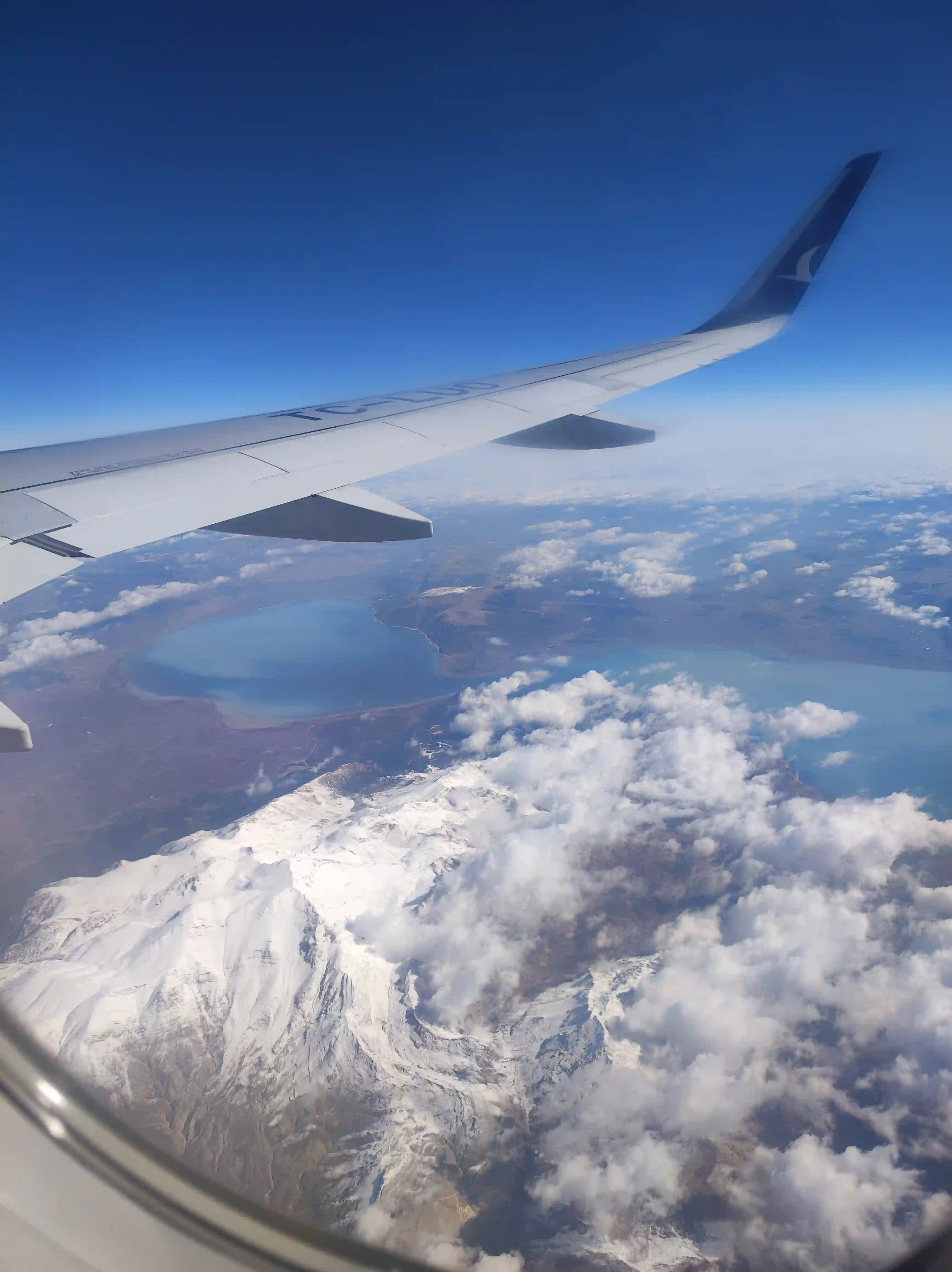
Nothing quite compares to the feeling of shopping for your first backpack.
So what to bring while travelling? Here are your travel essentials and the best backpacker packing list!
I still remember mine. Eight years later, it’s still with me — patched, sun-faded, and carrying the kind of character that only comes from being dragged across four continents by someone who refused to check a bag. I’m not a materialistic person by any stretch. Ask anyone who’s seen me live out of 40 litres for a year. But that backpack? That one’s different.
When you live on the road, your backpack isn’t luggage. It’s your address.
Backpacking is van life’s lighter cousin. Same philosophy: carry less, live more, figure it out as you go. Different logistics. And just like van life, it’s not about carrying everything. It’s about carrying the right things.
So here’s the list I wish someone had handed me before I left — not the Pinterest version with the matching packing cubes and colour-coordinated outfits, but the real one. Tested across 60 countries, one overnight bus theft attempt in Malaysia, and approximately one thousand hostel bathrooms of questionable character.
Let’s get into this travel essential packing backpacker’s packing list and what to bring while travelling.

Backpacking Menu
The Two-Backpack Perfect System (And Why It Might Have Saved My Life in Malaysia)
Before we talk about what goes inside, let’s talk about how many bags you’re actually bringing.
The answer is two. Always two.
Bag one — my Cabin Zero Classic Tech Backpack 28L — is my main carry. In it, I carry all my electronics, passport, bank cards, important documents, and anything I cannot replace easily. I keep this bag physically attached to my body at all times. It sleeps with me on overnight buses. It sits on my lap during sketchy border crossings. It does not, under any circumstances, go into a bus hold. I have the black one, but my next one will be a colourful one (for easy spotting reasons!). You can enjoy a 15% discount with this code at checkout: LYDIAMAJEAU12
Bag two — my Cabin Zero Classic Plus Backpack 42L — is for clothes, shoes, bathroom stuff, and everything that is, technically, replaceable. This is the one that goes in the overhead compartment. The one that gets a little roughed up. The one that could theoretically disappear. Same code works!
I bought my bags in 2018 for my first trip to Indonesia, and they are still like brand new. Even if I understand the purpose of choosing the cheapest options in some things, I would say don’t be cheap with your backpack(s).
For organising your clothes, I also suggest getting some packing sets or compressor packing sets. Check them out on Cabin Zero under accessories. They are of outstanding quality. You can still benefit from my discount at checkout.
Note that what it amazing with Cabin Zero is that they are both made for bringing with you in the cabin as carry-on. The bag one can fit under your seat and the bag too fits easily on the overhead bin.
Now, regarding the bus in Malaysia, I will explain why I suggest buying colourful backpacks.
Cameron Highlands to Kuala Lumpur. Overnight. I was exhausted, curtains pulled, doing my best impression of someone who had it together. My clothes bag was in the hold below. My Cabin Zero was on my lap. The important stuff was safe.
The bus stopped somewhere in the dark. Long stop. Nothing felt alarming. I dozed off.
Just before we pulled away, something woke me up. I opened the curtains.
Two guys. My black backpack in their hands. Already walking away from the bus as if it were nothing.
I ran. I screamed at the driver, who looked at me with the energy of a man who had seen this before and had made peace with it. I chased them down. They dropped the bag and bolted. And then I stood there on a Malaysian random street, heart pounding, taking my backpack back.
A patch I’d sewn on the front. That’s what did it.

Lesson one: Make your bag distinctive. A patch, a ribbon, a bright luggage tag — anything that makes yours at a glance in a dark hold at 3 a.m. Or choose a funky colour!
Lesson two: If you cannot replace it, it does not go in the hold. My friend learned this the hard way in Thailand. She tucked a fresh stack of baht into her big bag, put it in the hold, fell asleep, and arrived at the next stop considerably lighter. Not a myth. Not an isolated incident. A very consistent reality on certain overnight bus routes in Southeast Asia.
Two bags. Documents on your body. Clothes in the hold. That’s the system.
The Travel Gear: What Goes in Every Bag, Every Time on Every Backpacker’s Packing List
Some things aren’t up for debate in travel essentials lists and what to bring while travelling. Regardless of destination, season, or how optimistic you’re feeling about travelling light.
A reusable water bottle — because buying plastic bottles every day is expensive, wasteful, and frankly embarrassing by week two. A headlamp — because hostel dorms at midnight are dark, and your phone torch is not the same thing, and you will wake everyone up. A basic first aid kit — nothing elaborate, just plasters, antiseptic wipes, something for stomach issues, and any prescription medication you take. Pharmacies exist everywhere, but not always when you need them, not always with the brand you know, and not always in a language you can navigate at midnight.
These are the things that feel boring to pack and feel essential the moment you need them.
A Padlock (Honestly, Get Two)
A small combination lock for hostel lockers costs almost nothing and will save you from a full stress spiral when you realize the dorm has twelve people in it and your instincts are sending signals. Get a basic one for lockers, and consider a Cabin Zero Travel TSA Lock for securing your bag to a seat or rack on long-haul buses. Cheap, light, and worth it. Same 15 % discount code: LYDIAMAJEAU12
Two Pairs of Shoes. That’s the Whole Section.
Good hiking shoes, running shoes or boots — the kind built for six-hour days on your feet, cobblestones, trails, and whatever the weather does. Worth spending real money on. Your feet will either thank you or punish you for this decision, daily, for the entire trip.
And then — non-negotiable, I will die on this hill — Birkenstock sandals. The plastic ones. Waterproof, indestructible, weighs almost nothing. These are your hostel shoes, shower shoes, your beach shoes, your “I have been on a bus for eleven hours and I need my feet to be free” shoes. I’ve worn mine across Spain, Morocco, and Southeast Asia. They have never once let me down.
Not cute shoes. Good shoes. Two pairs.

Skincare: Because Your Face Is Coming With You
Backpacking is genuinely hard on the skin. Sun, saltwater, recycled plane air, humidity you could chew, and one hostel bathroom for twelve people. It adds up.
I keep it simple with La Roche-Posay for my daily face cream, specifically three products that travel well and actually work: the Toleriane Hydrating Gentle Cleanser, the La Roche-Posay Toleriane, and the Anthelios SPF 50 sunscreen. Cleanser, moisturiser, sunscreen. That’s the whole routine. I never skip the sunscreen, no matter how rushed the morning is, and the other two products calm my skin when it’s confused by the fourteenth climate change in three months.
Bonus: La Roche-Posay is available in pharmacies across Europe, Asia, and the Americas. You don’t need to leave home with a year’s supply. You just need enough to start.
Dry Shampoo & Shampoo Bar
There will be days when the hostel hot water is theoretical. When the bus was fourteen hours and the next one leaves in two. Dry shampoo stands between you and showing up somewhere looking like you’ve been on the road for three weeks — even when you absolutely have been.
A Fast-Dry Towel
Most hostels either charge for towel rental or simply don’t offer them. A microfibre travel towel takes up almost no space, dries in under an hour, and earns its place immediately. This OlimiaFit dry towel set is more than enough for your weekly use and is my go-to. Don’t skip it thinking you’ll sort it out on arrival. You will sort it out, but it will involve a paper towel situation and some quiet regret.
Another practical, fashionable multi-use option is the Turkish beach towel. You can use this one as your beach towel, your shower towel, a skirt, a robe, a scarf… And it dries quickly too!
On Clothes: Bring Less Than You Think
Pack cotton basics because cotton breathes better than most synthetics in real heat and looks like actual human clothing. The internet will tell you to go full merino wool and technical fabrics. That’s not bad advice. My advice is: bring fewer things and buy what you need locally.
Clothes exist in other countries. Markets in Southeast Asia, thrift shops in Lisbon, discount bins in Norwegian sports stores — some of my favourite pieces came from places I wasn’t expecting. Buy things when you need them. It’s cheaper and more interesting than planning for every scenario from home.
And always leave space. You will buy things. An alpaca sweater in Cusco, a rain jacket in Bergen — these things find you. Leave room for them.
A Passport Holder
Your passport is the most powerful object you own while you’re on the road. A passport holder protects it from water damage, wear, and the general entropy of being stuffed in and out of pockets across many borders. Small investment. Large peace of mind.
Sunglasses
Not a luxury. Get a pair you genuinely like and can emotionally handle losing, because eventually you will sit on them, leave them on a beach, or abandon them in a hostel common room and only realize three countries later. Again, you will find plenty of vendors if you forgot or lost yours!
A Waterproof Phone Case
You will take a boat. You will get caught in a monsoon. You will do something optimistic near water that doesn’t go as planned. A waterproof phone case costs almost nothing, weighs nothing, and you’ll be grateful for it exactly once — and then keep it for years.
Electronics: Don’t Assume You Can Find Them Later
This one matters more than people think. If you’re heading somewhere remote or off the standard tourist trail, bring everything you need: your laptop, phone, chargers, adapters, and a good (minimum 65W for laptop) power bank.
Finding quality electronics, reliable cables, or specific replacements can be genuinely difficult depending on where you are. Sometimes the right adapter simply doesn’t exist in the town you’re in. Sometimes it does, but it costs four times what it would at home. Don’t gamble on this one.
Another important item part of your travel essentials that keeps all your devices alive across borders is a universal travel adapter. You cannot always find one everywhere.
An E-Reader
Books are heavy. Believe me. I’m a big fan of paperback books. I used to always travel with a minimum of three books. The reality is that you cannot replace them so easily. I loved to write notes inside and leave them in hostels all around the world. But after reading the three, I could not find a French or English written book to replace them.
An e-reader holds hundreds of them in something lighter than a single paperback.
I now proudly own the Boox Note Air 5c for its flexibility, night light, and paperlike writing and noting options. Any dedicated e-reader transforms long bus rides, beach afternoons, and rainy hostel days where you’ve already talked to everyone and now you need literature. If you read, bring one. You won’t regret it.

Maps & Internet: The One Thing You’ll Regret Forgetting
If there’s one piece of advice I’d give every backpacker — the kind that quietly saves entire days of your trip. This is one of the most overlooked things on any backpacking packing list.
Always download your maps in advance on Google Maps.
Not when you land. Not when you’re already lost. Before.
Because at some point, you will arrive somewhere with no Wi-Fi, no signal, and no idea which direction is up. It happens in airports, bus stations, small towns, islands, mountains… sometimes all in the same week.
Downloading an offline map takes two minutes and can save you hours of wandering, guessing, or following someone who confidently does not know where they’re going. This is one of the most important travel essentials.
And while we’re here, internet is no longer a luxury when you travel. It’s logistics.
Booking accommodation last minute, checking bus schedules, translating menus, calling a ride, accessing your tickets, checking your bank… almost everything depends on being connected.
Relying on random Wi-Fi is a gamble. Sometimes it works. Sometimes it’s slower than your patience.
A local SIM card or an eSIM from Holafly or similar makes a tremendous difference. It’s not just about convenience — it’s about autonomy. You don’t have to plan your entire day around finding internet. You just… move.
It’s one of those things you don’t think about until you don’t have it — and then suddenly, it’s the most important item in your bag.
Moving vs. Staying: The Question That Runs Your Life Now
Here’s something nobody puts on a packing list but absolutely should: a decision-making framework for the road.
Every single day as a backpacker starts with the same question.
Do you move today — or do you stay?
Staying means slower days, more rest, going deeper into one place, finding the good café, actually getting to know the neighbourhood. Moving means figuring out how you’re going to get there, whether to book in advance or just show up, and how much it’s going to cost you in money and energy.
Neither is wrong. Both are the point.
For getting around, a few platforms are worth knowing:
For European trains, Omio is an excellent app for comparing routes and prices across countries. Flixbus covers a huge network of cheap routes across Europe — not always pet-friendly, so it’s worth checking before you book. For flights within Europe, Ryanair will humble you but get you there. You can compare rates on Kiwi before booking.
In Asia and South America, local bus stations and in-person agencies are still very much a thing — sometimes the best deals don’t exist online at all.
And sometimes you buy the ticket on the same day. Sometimes the day before.

Accommodation: The Honest Version
The two platforms you’ll use most are Booking and Hostelworld. The latter tends to be more expensive, though, but has extra options sometimes. Between them, they cover most of what you’ll need. Agoda is excellent, specifically for Southeast Asia. And sometimes, honestly, you just walk in and ask.
True story: I have lost count of how many times I walked into a hostel, had a lovely conversation with the owner, and then ended up booking online on my phone while standing in their lobby — because it was cheaper that way. Sad for them. Commission structures in the hospitality industry are genuinely brutal. But yes. That’s the reality. Check both.
Always download the map on Google Maps before you go, in case you don’t have internet or anything. That is probably the best advice I can give!
The Big Picture for Backpacker Essentials (Before You Zip It Up)
Whether it’s backpacking or van life, a few things stay constant: the more you move, the more you spend — and the more you see. You’ll find your own rhythm somewhere between the two.
Always listen to your energy. Listen to your reasons for doing this. You’re not out here to tick boxes or hit a quota of countries. You’re out here to feel something — curious, free, alive, occasionally mildly terrified on a bus in Malaysia. That looks different every day, and that’s exactly as it should be.
Your backpack is your home. Pack it like one, but don’t let it weigh you down. So here was my travel essentials list. I hope it helped!
What’s on your list that I haven’t mentioned?
Drop it in the comments — I read every one.
Safe travels!
Keep reading:
- Minimalist Living: How I Sold Everything to Travel The World Full-Time
- Planning Your 2026 Travel Budget: Smart Strategies
- Travel Friendships: When Strangers Become Family

Don't be shy!