
Skip To
Japan Travel Guide: My 3-Week Budget Itinerary
“Japan isn’t cheap,” everyone kept telling me before I left.
Coming from the Philippines, where I’d been happily living on a backpacker’s budget, I braced myself for financial pain. They weren’t entirely wrong. Japan certainly costs more than Southeast Asia, but after growing up in Canada, something funny happened the moment I landed in Tokyo.
It felt familiar.
Not just because of the prices.
As I stepped outside the airport, I caught the smell of pine trees and fresh air. The weather felt cooler, the streets impossibly clean, and suddenly I thought:
“This is Asia’s Canada.”
Out of every country I’d visited in Asia, Japan was the one that unexpectedly reminded me of home.
This trip was also special for another reason.
It was my reward after my first year living abroad and my last stop before completing a full circle around the globe. My plan sounded almost ridiculous: travel east until I reached the West again. After Japan, I flew to the United States via Hawaii, then Chicago, before finally returning to Montreal.
Three weeks turned into one of the most memorable adventures of my life.
I watched live sumo wrestling after waking up before sunrise, wandered through Akihabara looking for horror movies and Pokémon souvenirs, hiked around Mount Fuji, walked alone through Japan’s infamous Aokigahara Forest, got hopelessly lost in Kyoto because Maps.me betrayed me, fed overly enthusiastic deer in Nara and ended my trip broke but incredibly happy in Osaka.
If you’re planning a Japan itinerary, wondering whether it’s possible to explore Japan on a budget, or simply looking for a realistic Japan travel guide from someone who prefers hostels over luxury hotels, this guide is for you.
Here’s exactly how I spent three weeks exploring Japan.
Week 1
- Tokyo
Week 2
- Kawaguchiko (Mount Fuji & Five Lakes Region)
- Aokigahara Forest
- Kyoto-1
Week 3
- Kyoto-2
- Nara
- Osaka
- Flight to Hawaii
If I had one extra week, I’d honestly spend it outside the major cities. Japan’s countryside completely stole my heart.
Japan on a Budget
Let’s answer the question everyone asks.
Is Japan expensive?
Yes…
But probably not as expensive as you think.
After months travelling through Indonesia and the Philippines, I definitely felt the price difference. Groceries suddenly looked expensive again, accommodation wasn’t ridiculously cheap anymore, and transportation required a little more planning.
Compared to Canada, though?
Honestly, Japan felt fairly similar.
If you’re already used to Canadian or Western European prices, Japan won’t be nearly as shocking as people make it sound.
I saved money by staying in hostels, using buses instead of the Shinkansen, walking a ridiculous amount, and eating from convenience stores more often than I’d like to admit.
One thing I quickly learned is that convenience stores in Japan deserve their own fan club. Forget the sad gas station sandwiches back home. Japanese convenience stores somehow manage to make grabbing dinner feel like a good decision.
Tokyo Travel Guide
I decided to spend an entire week in Tokyo.
Looking back, it still wasn’t enough.
No Japan travel guide would be complete without Tokyo. It isn’t a city you finish. It’s more like several cities stitched together, each with its own personality.
One neighbourhood feels futuristic.
Another feels like you’ve stepped into the 1980s.
Turn one corner and you’ll find a peaceful shrine.
Turn the next and you’ll be surrounded by flashing neon lights, anime billboards and more people than you’ve ever seen crossing an intersection.
I loved every second of it.
Where I Stayed
I stayed at Guest House Fete, in Sumida neighbourhood, which turned out to be the perfect compromise between budget and location.
It wasn’t luxurious, but that’s never really what I’m looking for.
It was clean, easy to reach, and close enough to public transportation that exploring Tokyo felt effortless.
TeamLab Borderless
One of my favourite experiences was visiting TeamLab Borderless.
I’ve visited plenty of museums around the world, but this wasn’t really a museum.
It felt more like walking through someone else’s dream.
Rooms constantly changed around me, mirrors disappeared into infinity, flowers bloomed across walls and digital waterfalls flowed beneath my feet.
If you’re visiting Tokyo for the first time, I’d absolutely recommend adding it to your itinerary.

Akihabara: My Favourite Neighbourhood
Along with the Sumo fight experience, going to the Akihabara forest was in my life goal list. If you grew up with Pokémon, Nintendo, horror movies or anime, Akihabara is dangerous for your wallet.
I could have spent days wandering through its tiny shops.
I visited the Pokémon Store, browsed endless shelves of retro games, somehow convinced myself that I absolutely needed two Japanese horror movies and, perhaps my favourite souvenir of all…
I found a Tamagotchi.
It still works today.
Every time I see it, it reminds me of wandering those colourful streets wondering if I’d accidentally travelled twenty years into the future and the past at the same time.
Akihabara somehow manages to feel nostalgic and futuristic all at once.
Tokyo After Dark
Tokyo’s nightlife deserves its own chapter.
One minute you’re singing Britney Spears at a cheese-themed karaoke bar.
Ten minutes later you’re sitting inside a tiny silent bar where dozens of televisions are playing bizarre videos of baby chicks being force-fed grain.
Japan occasionally feels like someone shuffled reality before opening the doors each morning.
That’s what I loved most.
Every evening felt completely unpredictable.
The small izakayas became some of my favourite places to end the day. Tiny restaurants, good food, cold drinks and conversations that mostly relied on smiles, pointing at menus and hoping for the best. And of course… Japanese beer and whisky.
Don’t expect everyone to speak English. But with a few drinks, everybody laugh with the same language.
Many people actually understand more than they let on, but they’re often shy about making mistakes.
Even with the language barrier, I found people incredibly kind.
Watching Live Sumo Wrestling
This was the one thing I absolutely wanted to experience in Japan.
Getting tickets, however, felt nearly impossible.
Official seats sell out ridiculously fast. Thankfully, there’s a trick.
Wake up painfully early. Go to the arena before sunrise and wait. You can also reserve in advance if you prefer for a higher price here.
Every morning, a limited number of same-day tickets become available.
You’ll probably end up sitting in the last rows.
You’ll also have to come back later for the matches.
But while everyone waits outside, something magical happens.
The wrestlers begin arriving.
Watching enormous sumo wrestlers casually walk past wearing traditional robes and wooden sandals became almost as memorable as the tournament itself.
It remains one of my favourite travel memories in Japan.
If you only choose one paid activity during your trip…
Make it this one.
One week later, I still felt like I’d barely scratched the surface of Tokyo.
If your itinerary allows it, don’t rush through the city.
Tokyo rewards slow travel.

Mount Fuji, Kawaguchiko & Kyoto: The Side of Japan I Fell in Love With
After spending a week surrounded by Tokyo’s skyscrapers and flashing lights, I was ready for a slower pace.
I boarded a bus toward the Fuji Five Lakes region, one of the cheapest ways to get there. While many travellers choose the famous Shinkansen (Japan’s incredibly fast and famously punctual bullet train), buses are a much more budget-friendly option if you don’t mind taking a little longer.
And honestly?
Watching the scenery slowly transform outside the window was part of the experience.
Mount Fuji and Kawaguchiko
If Tokyo is Japan’s heartbeat, Kawaguchiko is where it takes a deep breath.
The Fuji Five Lakes region instantly became one of my favourite places in the country.
Instead of neon lights, there were quiet roads, forests, lakes reflecting the mountains, and people moving at a much slower pace.
I stayed at Dot Hostel & Bar, which had only recently opened when I visited in 2019. The hostel was spotless, cozy, and one of the first places in Japan where I met someone speaking excellent English. After spending a week relying mostly on Google Translate, it was strangely comforting.
The atmosphere was exactly what I needed after Tokyo.
Relaxed.
Friendly.
Simple.
Five days of pureness. Mount Fuji and Kawaguchiko were definitely my favourite places.

Mount Fuji Is Shy
One thing you’ll hear over and over around Kawaguchiko is that Mount Fuji is shy.
At first, I laughed.
Then I understood.
The mountain spends a surprising amount of time hiding behind thick clouds, leaving visitors staring hopefully at an empty patch of sky.
Locals barely seem bothered anymore.
Tourists, on the other hand, become meteorologists overnight.
Every few minutes someone glances upward, wondering if today might finally be the day.
Then it happens.
The clouds begin to separate.
Phones appear from every pocket.
People point.
Complete strangers smile at one another.
Some even clap.
I honestly can’t decide what I enjoyed more: finally seeing Mount Fuji in all its glory, or watching everyone’s excitement when the famous snowy peak finally revealed itself.
It’s one of those moments that reminds you travel is often about sharing wonder with complete strangers.

Hiking Around the Five Lakes
Most visitors come to photograph Mount Fuji and leave the same day.
Don’t.
Give yourself time to explore.
The Fuji Five Lakes region offers beautiful walking trails, peaceful lakeside roads, and countless viewpoints that somehow never felt overcrowded, even during peak season.
I spent most of my time simply hiking around.
No schedule. No checklist. Just wandering.
Sometimes the best travel days are the ones where nothing extraordinary happens.
Getting Around
Public buses connect most of the lakes and major viewpoints, making it surprisingly easy to explore without renting a car.
If you’re travelling on a budget like I was, buses are absolutely enough.
If you’re planning a longer trip through Japan, renting a campervan or car could make this region even more rewarding.
Walking Through Aokigahara Forest
I have a confession.
I’ve always loved horror.
Books.
Movies.
Abandoned places.
Ghost stories.
So naturally, one place had been sitting on my bucket list for years.
Better known online as Japan’s “Suicide Forest.”
Before I go any further, it’s worth saying this.
The forest’s tragic reputation is real, but it’s also become sensationalized over the years by movies, documentaries and social media. Local communities have worked hard to encourage respectful tourism rather than treating it as a dark attraction.
Once I actually stepped inside…
It wasn’t scary.
It was peaceful.
The dense volcanic forest absorbs sound so well that everything feels strangely quiet.
The trees twist in unusual directions.
The lava-covered ground creates uneven walking paths.
Sunlight barely filters through the branches.
I spent hours walking alone.
Every now and then I’d stop simply because the silence felt almost unreal.
And yes…
If I’m writing this travel guide today…
I survived.

Kyoto Travel Guide
Kyoto felt completely different from Tokyo.
Where Tokyo constantly asks you to look up, Kyoto encourages you to slow down.
The city is filled with temples, gardens, rivers, narrow streets and traditional wooden buildings that somehow make getting lost feel like part of the itinerary.
Which was lucky…
Because I got lost constantly. Thanks, Maps.me.
Back in 2019, that app had an impressive talent for sending me absolutely nowhere.
More than once I found myself standing in front of what was definitely not the hiking trail I had planned.
Still…
Some of my favourite memories came from those wrong turns.
The Book That Made Me Want to Visit Kyoto
Long before I visited Japan, I’d read Memoirs of a Geisha by Arthur Golden.
Like many travellers, that novel painted my first picture of Kyoto.
Walking through the old streets, seeing women dressed in beautiful kimonos and passing traditional tea houses made those pages come alive.
Whether you’ve read the novel or not, Kyoto feels like stepping into another era.
If you enjoy historical fiction, it’s one of the books I’d recommend reading before visiting Japan.
Wandering Without a Plan
I didn’t have a long checklist in Kyoto.
Instead, I walked.
A lot.
Along rivers. Through quiet neighbourhoods. Past tiny fabric shops displaying beautiful handmade textiles.
Every now and then I’d catch a glimpse of someone wearing a kimono disappearing down a narrow street.
Those moments felt far more magical than standing in long tourist queues.
Kyoto rewards curiosity. Take the side streets. Cross the small bridges. Leave Google Maps behind once in a while.
Some of my favourite discoveries happened completely by accident. And the cheapest for a perfect Japan on a budget trip.
Kurama-dera: Kyoto’s Hidden Mountain Temple
One of my favourite day trips from Kyoto was visiting Kurama-dera, a peaceful Buddhist temple hidden in the mountains just north of the city.
Getting there is a part of the adventure. A short train ride from Kyoto brings you to the tiny village of Kurama, where a gentle hike through cedar forests leads you uphill past small shrines, stone lanterns and quiet temples.
Compared to some of Kyoto’s more famous attractions, Kurama-dera felt wonderfully peaceful. There were no endless crowds, no rush, and no pressure to tick another famous landmark off my list.
Instead, I simply enjoyed walking through the forest, listening to the birds and taking in the mountain views.
If you’re looking for a quieter side of Kyoto, I highly recommend spending half a day here.
If you’re feeling adventurous, you can even continue hiking over the mountain to Kibune, another beautiful village known for its riverside restaurants.
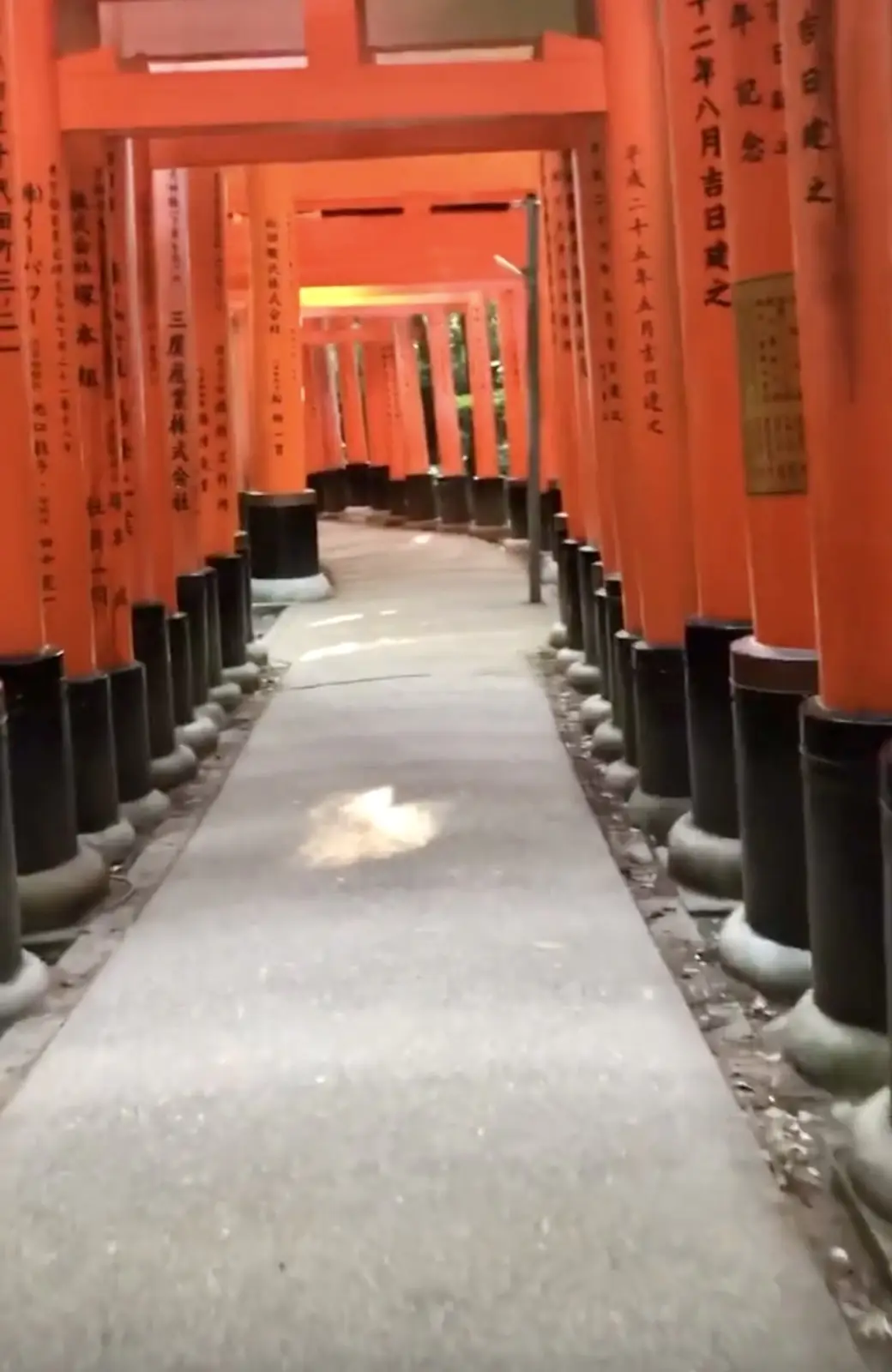
Fushimi Inari-Taisha
Of course, I couldn’t skip one of Japan’s most famous landmarks.
Fushimi Inari-Taisha is known for its thousands of bright orange torii gates stretching up the mountainside.
If you’ve ever seen a photograph of endless orange tunnels in Japan…
It was probably taken here.
Yes, it’s touristy.
Very touristy.
But sometimes famous places become famous for a reason.
Walking beneath those endless gates still felt surreal.
If you visit early in the morning, you’ll enjoy a much quieter experience before the crowds arrive.
By the time I left Kyoto, I understood why so many travellers say it’s their favourite city in Japan.
Tokyo amazed me.
Kyoto slowed me down.
And both were unforgettable.

Nara: A Small City Worth Adding to Your Japan Itinerary
After Kyoto, I made my way to Nara.
Most people come here for one reason.
The deer.
And yes… they’re absolutely everywhere. Some are adorable. Some are incredibly polite.
Others have clearly figured out that tourists equal food and have become tiny professional scammers.
If you buy the special deer crackers sold around the park, be prepared to become the centre of attention. I quickly learned that once one deer notices you, the others somehow receive the memo.
It’s chaotic.
It’s hilarious.
And despite being one of Japan’s most visited day trips, I still think it’s worth stopping by if you’re already travelling between Kyoto and Osaka.
Beyond the famous deer park, Nara feels much quieter than Japan’s larger cities. Beautiful temples, peaceful gardens and wide open green spaces make it a nice change of pace after several days of sightseeing.
One thing I noticed throughout my trip is that many places people describe as “touristy” were actually filled mostly with Japanese and other Asian visitors rather than international tourists. It gave the experience a completely different atmosphere than some of Europe’s overcrowded attractions.
If you’re passing through anyway, I’d recommend spending at least a day here. I spent two to three days as I was working too, and it was just perfect.

Osaka Travel Guide
By the time I reached Osaka, I’ll be honest… I was tired.
Three weeks of constantly moving, exploring, walking, and navigating another language had finally caught up with me. Especially after ten months backpacking for the first time in my life.
I always compare tiredness when you’re at the end of something, like when you’re on your way home and you need to pee. The closer you get to the door, then the bathroom, then the toilet, it seems impossible to hold it, even if it’s just a question of seconds. Well, the last days of this trip felt like I was getting so close, and I couldn’t hold my tiredness anymore.
My bank account wasn’t exactly thriving either, which didn’t help.
Instead of trying to squeeze every attraction into my schedule, I simply wandered.
Sometimes that’s exactly what a city needs.
Osaka immediately felt different from both Tokyo and Kyoto. It’s lively without feeling overwhelming. Modern without losing its personality.
People often describe Osaka as Japan’s food capital, and judging by the incredible smells drifting from every corner, I completely understand why.
Unfortunately, my backpacker budget wasn’t quite as enthusiastic as my stomach.
Looking back, I wish I’d stayed longer. Osaka deserved more energy than I had left to give it.
Maybe that’s just another reason to go back.
Budget Accommodation in Osaka
Like everywhere else in Japan, I stayed in a budget hostel. Unfortunately I cannot find it again, but as usual I always tooks the cheapest and closest walking distance to the bus station or airport.
If you’re trying to save even more money, though, Japan has one accommodation option that’s worth mentioning.
Internet cafés.
Yes.
Actual internet cafés. You can read about it here.
They’re much more than rows of computers.
Many offer private cubicles with comfortable chairs or small sleeping spaces, showers, unlimited drinks, vending machines and surprisingly decent facilities.
For backpackers looking for the absolute cheapest place to spend a night, they can cost around the price of a fast-food meal back home.
Would I spend weeks living in one? Probably not.
Would I try it for a night just for the experience? Absolutely.
Travelling Japan With a Dog
When I visited Japan in 2019, Karma wasn’t part of my life yet. I wouldn’t meet my little adventure buddy until nearly a year later in Bolivia.
If I returned today, travelling with her would be possible, but Japan isn’t one of those countries where you simply show up with your dog and hope for the best.
So… is travelling Japan with a dog possible? Yes, it is. But it’s not an easy job.
Because Japan is an island nation with an extremely low risk of rabies, the country has some of the strictest pet import requirements in the world.
Depending on where you’re travelling from, you’ll usually need:
- An ISO-compatible microchip.
- Valid rabies vaccinations.
- A rabies antibody blood test.
- Advance notification before arrival.
- Official veterinary paperwork.
- A waiting period that can be several months.
It’s definitely not impossible. It just requires planning far in advance.
You can visit the official website for Japan pet import here.
If you’re considering bringing your dog, I’d recommend making Japan the centrepiece of a longer trip rather than a spontaneous stop to avoid headache with paperwork for just a few weeks.
Karma was here: No. Karma was not even born!
Dog-friendly? I saw a couple of domestic dogs around. I couldn’t really say as I didn’t experience it myself.
Transportation Tips for Japan
One of the biggest questions travellers ask is whether the famous JR Pass is worth buying.
The honest answer? It depends.
If you’re planning to travel across the country at high speed every few days, it can save money.
For my itinerary, though, buses were often the better (and cheaper) choice. You can visit websites like this one to book in advance.
They were slower, but significantly cheaper, and I wasn’t in a hurry.
Japan’s transportation system is one of the most efficient I’ve ever experienced. Trains arrive almost exactly when they say they will. Stations are spotless.
Everything simply works.
Download Google Maps before arriving just in case. This is just a normal practical tip for every country.
Fun Facts About Japan
Here are a few things that surprised me during my three weeks exploring Japan.
There Are Hardly Any Public Garbage Bins And No Dumpster Diving
It sounds strange, but you’ll quickly notice it.
Despite the lack of bins, Japan remains one of the cleanest countries I’ve ever visited.
People simply carry their rubbish until they find somewhere appropriate to throw it away.
One thing that completely surprised me? Dumpster diving is basically impossible. Behind convenience stores like 7-Eleven, garbage is often kept in locked enclosures or private waste areas. Even expired food usually isn’t handed out and instead goes through strict disposal procedures. As someone who occasionally enjoys the art of free food hunting while travelling, Japan quickly reminded me that this country plays by a very different set of rules.
Convenience Stores Are Amazing
Need breakfast? Lunch? Dinner? Cash? Fresh coffee? An umbrella? Clean washrooms?
Convenience stores somehow do it all.
English Isn’t Widely Spoken
Many people understand more English than they feel comfortable speaking.
Don’t mistake shyness for unfriendliness.
Even when communication was difficult, people regularly went out of their way to help me.
A smile and a few words in Japanese go a very long way.
Grocery Shopping Can Surprise You
Coming from Southeast Asia, grocery prices felt expensive.
Coming from Canada…
They felt strangely familiar.
If I Returned Tomorrow…
This is the part where I completely ignore my own itinerary. Because if I returned to Japan tomorrow, I wouldn’t spend most of my time in Tokyo. I’d rent a tiny campervan. Or buy a bicycle. Or spend weeks sailing from island to island.
Some of my favourite memories happened far away from the skyscrapers.
Around Mount Fuji. Beside quiet lakes. On peaceful walking trails. Watching locals go about their everyday lives.
Japan’s cities are incredible.
But I have a feeling its greatest stories are hidden in tiny fishing villages, mountain roads and campsites where tourists rarely stop.
Maybe I’d even bring a tent.
Slow down.
Stay longer.
And let Japan surprise me all over again.
Final Thoughts
Japan challenged almost every expectation I had before arriving.
I expected an overwhelming megacity and found peaceful forests.
I expected impossible prices and discovered that, with a little planning, travelling Japan on a budget is absolutely realistic.
I expected cultural differences.
Instead, I found unexpected similarities that reminded me of home.
Would I go back?
Without hesitation.
Because after three weeks, I didn’t feel like I’d finished Japan. I felt like I’d only been introduced.
And somehow, I think that’s exactly how Japan wants it.
Frequently Asked Questions About Japan
Is Japan expensive to travel?
Japan is more expensive than most Southeast Asian countries, but comparable to Canada, Australia and much of Western Europe. Staying in hostels, using buses instead of high-speed trains and eating at convenience stores can make a backpacking trip surprisingly affordable. If you tent around instead of hosteling, it can also save way more.
How many days do you need in Japan?
I spent three weeks exploring Tokyo, Mount Fuji, Kyoto, Nara and Osaka, and it felt like the perfect introduction. If you’re visiting for the first time, I’d recommend at least this lenght, especiallay if you’re coming as far as from the Americas.
Is Japan safe for solo travellers?
Absolutely. Japan is one of the safest countries I’ve ever visited. Like anywhere, you should use common sense, but I never felt uncomfortable travelling alone. Not once.
Is Mount Fuji worth visiting?
Without question. The Fuji Five Lakes region became one of my favourite places in Japan. Even if the mountain decides to stay “shy” behind the clouds for a while, the surrounding lakes and hiking trails are worth the trip.
Before You Go…
Have you been to Japan? Or Japan on a budget?
Or is it still sitting on your bucket list?
I’d love to hear what destination you’re most excited to explore. And if this guide helped you plan your trip, feel free to share it with another traveller who’s dreaming of Japan.
Happy travels!!
Keep Reading
- Van Life in Morocco: The Complete 3-Month Road Trip Itinerary, Costs & Safety Guide
- Albania Travel Guide: Van Life, Albanian Alps, Riviera Beaches & Budget Travel
- How to Stay in Europe Longer Than 90 Days: A Long-Term Traveller’s Guide

Don't be shy!