
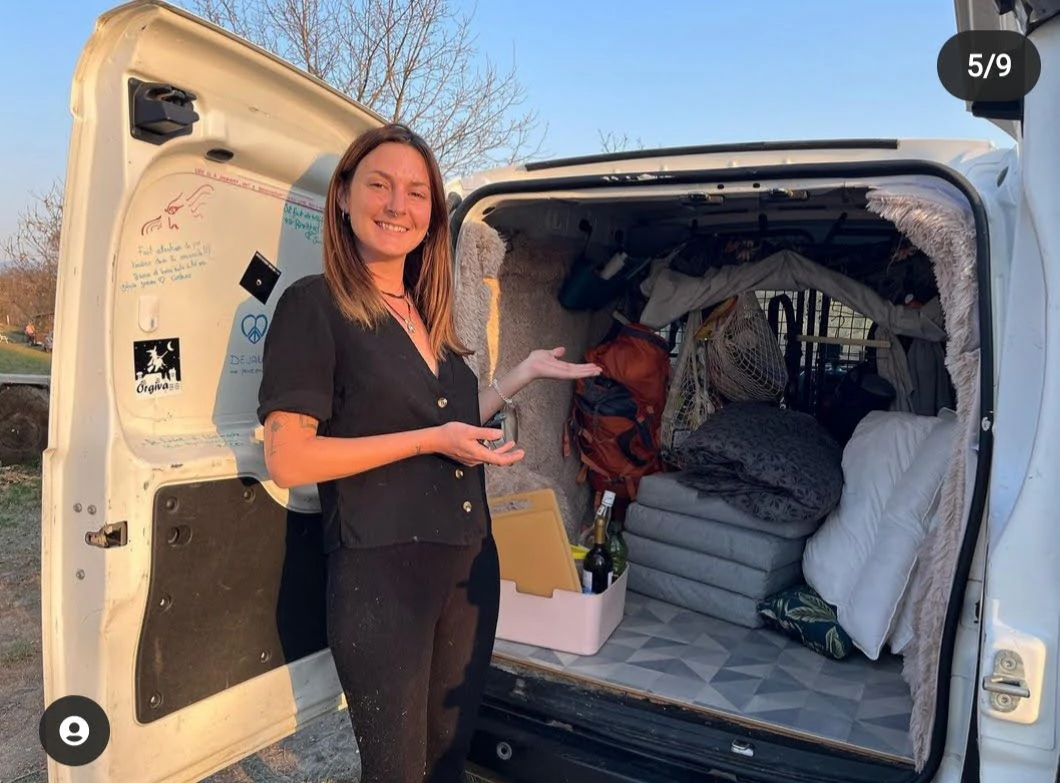
This isn’t about the Instagram version of van life, or the usual van life essentials aesthetic you see online.
You know the one — fairy lights strung across a perfectly organized shelf, artisan coffee steaming in a ceramic mug, golden hour flooding through linen curtains. It’s beautiful. It’s also not how most days actually go.
Real van life starts somewhere more honest: understanding what you need for van life, your basic needs, and the van you actually have.
If you’ve read my van stories before — four vans, two continents, thirty-six countries on wheels — you’ll know this comes from experience. Check out my Van Life page. Each one taught me something different about what matters when the road is your address.
This post focuses on van life gear. Specifically: the real van life essentials and camper van essentials you actually need in a basic van, a converted cargo, a DIY build, or a simple camper. The stuff that makes the difference between surviving van life and genuinely loving it.
Because van life doesn’t start with fairy lights. It starts with power, water, and a plan for your toilet situation.
Let’s talk about that.

Wheel of Contents
It All Starts With Two Things
Before any gear list, before any Amazon cart — two questions.
What do you actually need? Not what van life influencers carry. Not what looks good in a build video. What you need to be comfortable, functional, and sane on the road day after day.
What van do you have? If you’re in a full motorhome like my Warrior — a 1990 Winnebago that drove from Canada to Mexico and back — you might already have a built-in kitchen, water tanks, a toilet, a shower, and a real bed over the cab. The Warrior had all of it. It made absolutely no sense on fuel. I loved it completely. I also love my Citroen Nemo in France, which was the total opposite! Even if you don’t want to admit it, the vehicle you choose shapes the trip you’ll have. Choose wisely!
But most people starting out aren’t in a Warrior. They’re in something smaller, simpler, and more improvised. And for those builds, what you bring matters enormously. And let’s be honest, with the gas price at the moment, you might wanna rethink the engine you will end up choosing.
Power: The Foundation of Everything
Nothing else on this list works without power. Not your phone, not your work, not your lights, not your fridge. Power is the infrastructure of van life, and it’s worth getting right before anything else.
For portable, scalable power, EcoFlow is my favourite. It makes portable power stations that can run lights, charge devices, power a small fridge, and keep your laptop going for a full workday. You can also add solar panel(s) to regenerate it in sunny places. I have the River 2 with a 100 W solar panel, and it’s been more than enough for all my devices.
A few things nobody tells you clearly enough: Starlink works, but it eats power. It’s expensive to subscribe to, and it’s expensive to run. If your electrical setup isn’t built for it, it’ll drain your battery faster than you expect. It’s a great option for remote areas with no cell service, but go in with eyes open about what it actually costs in amps.
For most van lifers doing a mix of urban and nature, a good power station plus a reliable eSIM with international data like Holafly is a more practical and budget-friendly combination. I’ve used this setup across Europe — it covers most situations without the Starlink overhead. It all really depends on your data needs and location.
Water and Hygiene: The Daily Reality
Here is what nobody romanticizes about van life: water is heavy, water runs out, and figuring out your water situation takes up more mental energy than you expect.
A portable water dispenser is one of the most useful things in a basic van. It keeps drinking water accessible without digging through your storage every time, and it’s easy to refill at campgrounds, gyms, service stations, and supermarkets.
For showers — and yes, you do still shower in van life, just differently — a portable solar shower is a genuine game-changer. You fill it, leave it in the sun for a few hours, and by afternoon you have surprisingly warm running water. It works in a parking lot, behind the van, at a beach. It weighs almost nothing. It costs almost nothing. It’s one of the best investments in the van life category, full stop.
On days when the solar shower isn’t happening — it’s raining, you’re in a city, you’re parked somewhere inconvenient — baby wipes are your best friend, and nobody should be embarrassed about this. Every van lifer has a pack within arm’s reach. They handle more situations than you’d like to admit and ask nothing in return.
For soap, shampoo, and anything that goes down a drain outside: use biodegradable products. This matters especially for outdoor showers near rivers, lakes, or anywhere you’re not connected to proper plumbing. It’s a small swap that makes a real difference.
For dishes: a small collapsible basin, a brush, and biodegradable soap — handles everything without wasting water. The goal is minimum water use with maximum cleanliness. You get good at it faster than you think. You can also mix water and biodegradable soap in a spray bottle and dry the dishes for a quick wash. Small trick.
The Toilet Situation (We’re Talking About It)
If you’re in a full motorhome, you have a toilet and this section doesn’t apply to you. You still need to manage the emptying and all, but still, way more practical.
If you’re in a basic van, you’ve thought about this. Maybe you’ve tried not to think about it. Here’s the honest version: a portable camping toilet is worth having for nights when you’re parked in the city mainly. Personally, I find it stinky and a lot of dirty work to clean.
In the wild, most people dig a hole. So a small shovel makes the deal.
Not glamorous. Completely essential. Back to the roots.
The Fridge: Optional Until It Isn’t
A mini portable fridge is one of those things that feels like a luxury until you’ve spent a full year managing food without one. No more planning every single meal around almost daily grocery store stops. No more sad, warm drinks in the summer heat.
If your power setup can support it — and with an EcoFlow or any other charging device can take. It usually can if you have a solar panel installed. This is the quality-of-life upgrade that changes how you eat on the road.
The Little Things That Make It Home
This is the category people underestimate — the small details that turn a metal box on wheels into a space you actually want to be in at the end of the day.
A or older van models — the kind that connects via the radio antenna port or a cassette adapter — means you have your playlist regardless of whether your van has Bluetooth, AUX, or nothing but an AM/FM dial from 1992. Kerouac, my 2003 Dodge Ram in Mexico, had exactly this situation. We found a way.
Small decorative touches — a plant that can handle the movement (be careful when you cross borders though!), a rug that makes the floor feel less like a floor, a string of warm lights for evenings — cost almost nothing and do a surprising amount for morale. Van life is as psychological as it is logistical. Making your space feel like yours matters.

A Typical Day: The Honest Version
You wake up already outside. That alone feels like something slightly illegal in the best possible way.
For Karma, its instant paradise. For me, it always starts the same: coffee first, fresh air, a short walk while the world is still quiet. Then comes the question that runs the whole day.
Do you move today or do you stay?
Staying means slower days, deeper exploration, rest, finding the suitable spot and actually staying in it. Moving means a chain reaction: research the next location on Park4Night (for Europe) or iOverlander (for the Americas), figure out groceries and water and whether you need a shower stop, plan a route that doesn’t zigzag and burn a tank of gas in the wrong direction.
Something nobody tells you clearly: days fly by in van life, especially in winter. When you move spots, time evaporates. When you stay put, it’s calmer — but after a few days, something always runs out. Food, water, data, a clean set of clothes, patience. You always need something from somewhere. A fridge is less needed, though. I used to eat soup and drink tea all day to warm me up!
That’s not a complaint. It’s just what the rhythm actually looks like.
Getting Around: The Apps and Platforms Worth Knowing
On top of the app mentioned before, your best friend is, hands down, Google Maps. For fuel, groceries, laundry, and everything else. In North America, Walmart is the great van life enabler — free overnight parking (in most cities or states), sometimes 24-hour access at least until late at night, 7 days a week, and everything you need under one roof. In Europe, the equivalent is Action, Lidl, and the local gas station and garage.

The Reward at the End of It
Once everything is handled — the water, the power, the groceries, the route — you cook something simple and you sit down.
The window shows a view you didn’t pay rent for. It might be a mountain, a beach, a quiet forest, or a perfectly ordinary car park that somehow looks beautiful in the evening light. You’ve earned it. Not because van life is hard — it’s not, not really — but because you chose it, organized it, and made it work that day.
Cozy nights in the van, a movie on the laptop, Karma already asleep — that’s the reward. That’s what the gear list serves. Waking up at the mercy of nature. There is something so strong, poetic, and yet calming about this part of it.
Van life isn’t for everyone. But I genuinely believe everyone should try it at least once and then decide.
Want to go deeper?
- Memories on Wheels: All Four Vans, Two Continents
- Van Life Budget Europe 2026: Real Monthly Costs
- USA Road Trip: 5 Months of Van Life from New York to the Wild West
- Van Life in Morocco: 3-Month Road Trip Guide

Don't be shy!