
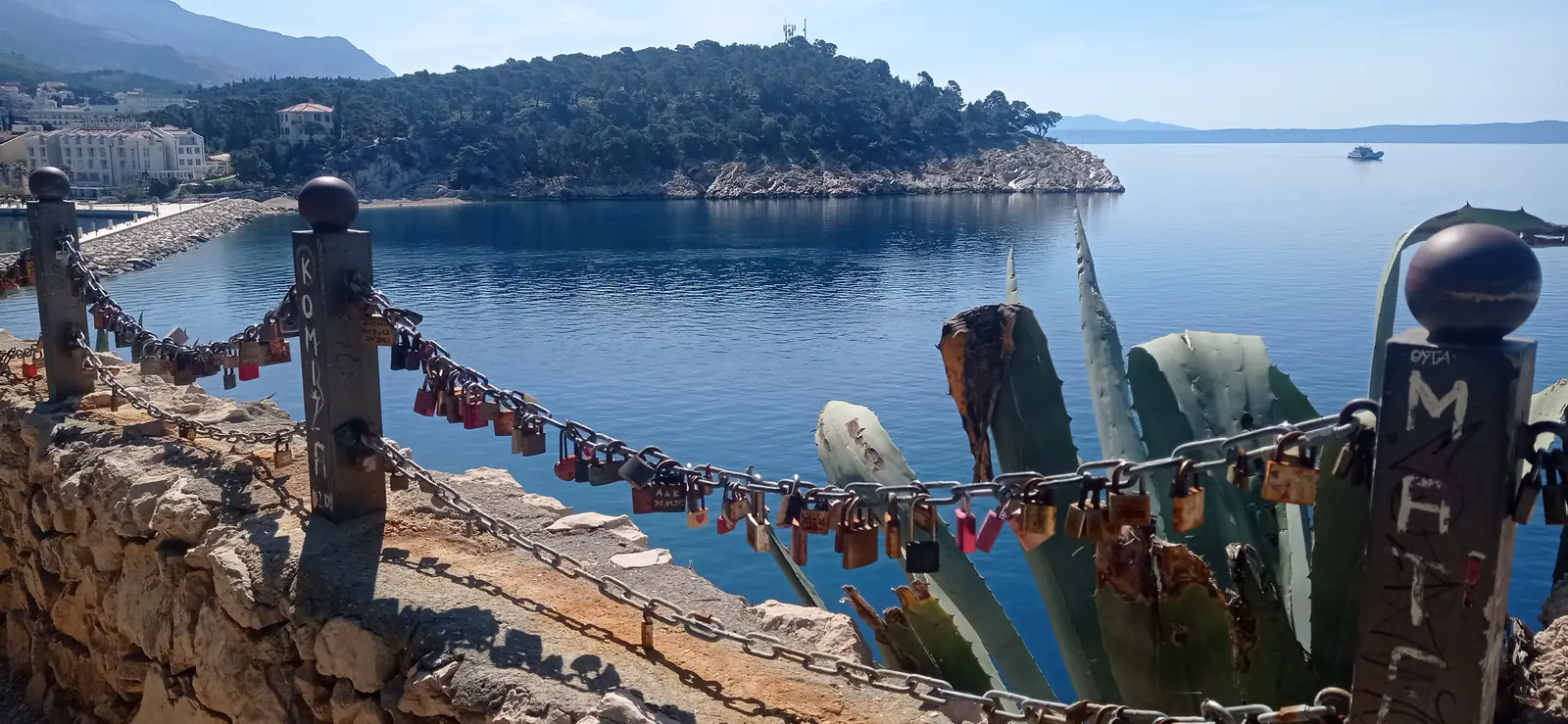
Croatia was not a country I had planned for years in advance. Sometimes, the most memorable destinations are the ones that appear naturally on the road.
In 2022, after spending my first Schengen months traveling through France, Spain, and Portugal, I was looking for another place to continue my European adventure while waiting for my Schengen time to reset. At that time, Croatia was still outside the Schengen Area, making it a popular destination for long-term travelers and digital nomads looking for a European escape.
Today, Croatia is part of the Schengen Area, having joined on January 1st, 2023, but back then it felt like crossing into a new chapter of my journey. It was also my first real introduction to Eastern Europe, a region that would bring me different landscapes, cultures, histories, and stories.
Traveling through Croatia with my little Citroën Nemo, I discovered a country that had much more to offer than its famous turquoise waters and medieval coastal towns. From snowy mornings in the mountains to ancient cities along the Adriatic Sea, Croatia surprised me at every turn.

Table of Contents
Croatia at a Glance
Capital: Zagreb
Official language: Croatian
Currency: Euro (€) (since 2023)
Population: Around 3.8 million people
European Union: Member since 2013
Schengen Area: Since January 1st, 2023
Best time to visit: May, June, September and October
Main attractions: Dubrovnik, Split, Plitvice Lakes, Krka National Park, Croatian islands and the Adriatic coast
A Brief History of Croatia
To understand Croatia today, it is important to understand the many influences that shaped this country. Located between Central Europe, the Balkans and the Mediterranean, Croatia has always been a crossroads of civilizations.
The region was first inhabited by ancient Illyrian tribes before becoming part of the Roman Empire. Roman influence can still be seen today in places like Split, where the impressive Palace of Diocletian remains one of the best-preserved Roman monuments in the world.
During the Middle Ages, Croatia developed its own kingdom before entering different political unions and being influenced by neighboring powers. Along the coast, the Republic of Venice left a strong cultural mark, which can still be seen in the architecture of many coastal towns, from Trogir to Dubrovnik.
Later, much of Croatia became part of the Austro-Hungarian Empire, bringing another layer of Central European influence, especially visible in cities like Zagreb.
The 20th century brought one of the most complex chapters in Croatian history. After World War II, Croatia became part of socialist Yugoslavia, a federation that included six republics: Croatia, Slovenia, Bosnia and Herzegovina, Serbia, Montenegro, and Macedonia.
In 1991, Croatia declared independence, leading to the Croatian War of Independence between 1991 and 1995. This recent history is still present in the memories of many Croatian families and has shaped a strong sense of national identity.
Today, Croatia is a modern European country known for its incredible coastline, historic cities, national parks, and a unique cultural mix influenced by Mediterranean, Balkan, and Central European traditions.
My Croatian Adventure: From Schengen Escape to Eastern Europe
My Croatian adventure started before I even reached the country.
When traveling long-term through Europe with a vehicle, crossing borders is not only about looking at a map. You also have to think about distance, fuel costs, road conditions, vehicle maintenance, and your own energy.
For long distances, I always compare driving versus taking a ferry. Ferries can seem expensive at first, but when you calculate hundreds or thousands of kilometers of driving, the cost of fuel, oil changes, mechanical wear, additional mileage, and the exhaustion of spending many hours behind the wheel, the result can be surprising.
In my case, I compared different options using Google Maps and estimated the cost of fuel and road expenses. Taking a ferry from Barcelona to Rome and continuing north by road toward Croatia ended up being cheaper, more relaxing, and gave me something priceless: a free night of travel on the boat.
That is how my adventure began.
(I will share more about those countries I crossed along the way in future travel stories!)
You can read more on how to stay longer in the Schengen area here if you want to go that path.
A Winter Workaway Experience in Rural Croatia
Before arriving in Croatia, I had found a Workaway opportunity north of Zagreb to spend the final weeks of winter.
The work exchange was quite unusual, but also one of the easiest I have ever done. My main responsibility was simply taking care of an old Croatian family’s house while they were away.
The house had not been properly cleaned for decades, so I spent some time bringing it back to life. Beyond that, my daily tasks were simple: cutting wood to keep myself warm, enjoying quiet days alone, and sharing wine with the family when they came to visit.
The owner of the house was an older Croatian journalist who had worked during the Yugoslav era. He had countless stories to tell about the country, its history and how life had changed over the decades. For his generation, his English was surprisingly good, and our conversations became one of the highlights of my time there.
Those peaceful weeks alone in the Croatian countryside gave me something unexpected: time to write.
It was during this quiet period that I found the motivation and inspiration to work on Le Curichal, my latest published book in French. If you are curious about my writing journey, you can discover more on my book page.
Snowy Mornings and Almost Losing My Van
Croatia also gave me one of those small travel moments that stay forever.
One morning in April, I woke up and looked outside my window. Everything was completely white.
After spending so much time traveling through warmer countries, seeing snow again felt almost magical. I spent the morning cutting more wood, keeping warm inside and enjoying the peaceful winter landscape surrounding me.
Of course, every adventure comes with unexpected moments.
My host was, according to some neighbors, a bit too enthusiastic with fire. My little Citroën Nemo came dangerously close to becoming part of the bonfire story, but thankfully I reacted quickly and moved it away before anything happened.
Another reminder that life on the road is never boring.
Zagreb: Croatia’s Underrated Capital
During my stay in northern Croatia, I had plenty of opportunities to visit Zagreb, the country’s capital. Although most travelers rush toward the Adriatic coast, I genuinely think Zagreb deserves at least a couple of days on any Croatia itinerary.
Compared to cities like Split or Dubrovnik, Zagreb feels less touristy and more authentic. The city has a relaxed atmosphere where Austro-Hungarian architecture meets lively cafés, colorful streets and beautiful parks. Walking through the Upper Town (Gornji Grad), you will discover cobblestone streets, historic churches, markets, and charming squares that make the city enjoyable to explore on foot.

One attraction I particularly enjoyed was the Museum of Broken Relationships. It may sound unusual, but it is one of the most original museums I have visited. Through everyday objects donated by people from around the world, it tells surprisingly emotional, funny, and sometimes heartbreaking stories about love and loss. Whether you’re traveling solo, with friends, or as a couple, it is definitely worth a visit.

Unfortunately, my Workaway was located about thirty minutes outside the city, so I never really experienced Zagreb’s nightlife. Still, after wandering through its streets, I can easily imagine spending a few evenings enjoying its cafés, restaurants, and lively atmosphere.
If your Croatia itinerary allows it, don’t make the mistake of skipping the capital.
Plitvice Lakes National Park
If there is one place that absolutely deserves a spot on every Croatia itinerary, it is Plitvice Lakes National Park.
A UNESCO World Heritage Site since 1979, Plitvice is famous for its sixteen interconnected lakes linked by countless waterfalls, turquoise pools, and wooden boardwalks winding through lush forests. It is one of those rare places that genuinely looks even better in person than in photographs.
I visited around March and April, just before the busy tourist season. The weather was still quite chilly, but I actually appreciated experiencing the park without the overwhelming summer crowds. The cooler temperatures also made hiking much more enjoyable.
There are several walking routes depending on how much time you have, ranging from short loops to full-day hikes. Wooden pathways bring you incredibly close to the waterfalls without disturbing the fragile ecosystem, making every turn feel like a postcard.
One thing I particularly appreciated was that Karma could join me. Dogs are welcome throughout most of the park as long as they remain on a leash, making Plitvice one of the best national parks in Croatia for travelers exploring with their furry companions. If you’re planning on traveling to Croatia with a dog, this is definitely an experience you won’t want to miss.
Whether you’re passionate about photography, hiking, or simply enjoying nature, Plitvice Lakes National Park easily ranks among the most beautiful places I have visited in Europe.

Krka National Park
While Plitvice often steals the spotlight, Krka National Park is another destination that deserves a place on your Croatia travel itinerary.
Although smaller than Plitvice, Krka offers a completely different atmosphere. The park follows the Krka River through forests, waterfalls and peaceful walking trails, making it perfect for a relaxing half-day or full-day excursion.
The wooden paths are easy to follow and lead to spectacular viewpoints overlooking the famous waterfalls. Throughout the walk, you’ll find quiet spots where you can simply sit, enjoy the scenery and have a picnic while listening to the sound of rushing water.
Depending on the season, you can also take a boat excursion to explore different parts of the park and nearby islands.
If you have enough time, I highly recommend visiting both Plitvice and Krka. While they are often compared, they each offer a unique experience and are among Croatia’s greatest natural treasures.

Zadar: Where Croatia Starts Feeling Mediterranean
After spending time in the mountains of northern Croatia, arriving in Zadar finally gave me that Mediterranean feeling I had been looking forward to.
Palm trees, stone streets, outdoor cafés and the sparkling Adriatic Sea instantly changed the atmosphere. It was here that Croatia truly started feeling like the coastal paradise most people imagine.
Zadar is one of Croatia’s oldest cities, with Roman ruins, medieval churches, and fortified walls blending seamlessly into everyday life. But despite its long history, the city also has a modern and creative side.
Its two most famous attractions are the Sea Organ, an architectural installation that creates music using the movement of the waves, and the Greeting to the Sun, a large solar-powered light installation that comes alive after sunset.
Many people even claim that Zadar offers one of the most beautiful sunsets in Europe. After spending an evening walking along the waterfront, I completely understand why.
Another reason I enjoyed Zadar is its location. It serves as an excellent base for exploring both Plitvice Lakes National Park and Krka National Park, while also giving easy access to Croatia’s islands and coastal road.

Split: History Meets the Adriatic
Further south lies Split, Croatia’s second-largest city and one of the country’s most popular destinations.
Unlike many historic cities where monuments are separated from daily life, Split feels alive. At its heart stands the incredible Diocletian’s Palace, built by the Roman emperor nearly 1,700 years ago. Today, cafés, apartments, restaurants and small shops are all built within its ancient walls, creating one of the most unique historic centers in Europe.
The lively Riva promenade stretches along the waterfront and quickly became one of my favorite places to simply sit and watch boats coming and going. There is always something happening, whether it’s street musicians, locals enjoying coffee or travelers preparing to catch one of the many ferries departing for Croatia’s islands.
If you’re planning to explore the Adriatic, Split is one of the best places to use as a base.
Trogir
Only a short drive from Split, Trogir is often overlooked despite being another UNESCO World Heritage Site.
Built on a tiny island connected by bridges, its narrow stone streets, Venetian architecture and charming waterfront create an atmosphere that feels almost frozen in time.
Trogir is much smaller than Split, making it easy to explore in just a few hours. It’s the perfect stop while driving along the Croatian coast or if you’re looking for a quieter alternative to some of the country’s larger tourist destinations.
Sometimes the smallest places end up leaving the strongest impressions.
Croatia’s Islands
One of Croatia’s greatest treasures is undoubtedly its coastline.
Stretching for more than 1,700 kilometers along the Adriatic Sea and home to over 1,200 islands, islets and reefs, Croatia offers endless opportunities for island hopping. Some islands are lively and luxurious, others remain peaceful fishing villages where life still follows the rhythm of the sea.
From Split, ferries depart daily to many of Croatia’s most famous islands, making it incredibly easy to include one or several in your itinerary. Whether you’re traveling on foot, by bicycle or with a vehicle like I was, island hopping is one of the highlights of visiting Croatia.
Hvar
If you’ve done any research about Croatia, you’ve probably already heard about Hvar.
Known for its crystal-clear water, historic old town, lavender fields and glamorous nightlife, Hvar has become one of the country’s most famous destinations. Luxury yachts fill the harbor during summer while restaurants, bars and beach clubs attract visitors from all over the world.
If you’re looking for vibrant nightlife, trendy cafés and a lively atmosphere, Hvar will probably be your favorite Croatian island.
Brač
Personally, I decided to visit Brač instead.
It turned out to be exactly the kind of island I was looking for.
Although Brač is also a popular destination, it felt much calmer, especially during the shoulder season. Small villages, quiet roads and beautiful coastal scenery made it the perfect place to slow down for a few days.
Like many van travelers, my first instinct was to stay close to the beach. However, Croatia has become increasingly strict regarding overnight parking along the coast. Even outside the busy summer months, finding a place where I could stay for more than one night proved surprisingly difficult.
Eventually, I drove toward the center of the island and climbed into the hills.
The atmosphere completely changed.
There were fewer people, more nature and incredible panoramic views over the Adriatic Sea. The only downside? The wind.
I don’t think my little Citroën Nemo had ever been shaken around quite that much before.
If you visit Brač, don’t limit yourself to the coastline. Some of the island’s most beautiful scenery is actually found inland.
You’ll buy your ferry right at the port or online on platforms like Directferries.com. As you can see, you can bring your van or bike.
Dubrovnik: The Pearl of the Adriatic
Leaving Dubrovnik until the end of my Croatian journey was the perfect decision.
Nothing had quite prepared me for my first glimpse of the city.
Massive stone walls rise directly above the Adriatic Sea, while orange rooftops cover the historic center like a sea of terracotta. Walking through Dubrovnik feels like stepping into another century.
It is easy to understand why UNESCO listed the Old Town as a World Heritage Site and why the city became internationally famous after appearing in Game of Thrones.
Although Dubrovnik can become extremely crowded during the summer, I visited during the off-season and had a much more enjoyable experience. Wandering through the narrow limestone streets, climbing the ancient city walls and watching the boats enter the harbor became one of the highlights of my trip through Croatia.
Like many travelers in a campervan, I was also looking for affordable parking.
To my surprise, I managed to find free parking about 45 minutes on foot from the Old Town. Considering how expensive parking can be near Dubrovnik, I happily enjoyed the walk into the city.
Sometimes saving a few euros also gives you the chance to discover neighborhoods you would otherwise never visit.
Before continuing south toward Montenegro, I even spent one final night at an old abandoned helicopter landing area overlooking the sea.
It was one of those unforgettable camping spots that only life on the road seems capable of offering.

Is Croatia Expensive?
When many people think about the Balkans, they automatically assume everything will be cheap.
Croatia is the exception.
Thanks to its spectacular coastline and booming tourism industry, it has become one of the most expensive destinations in the region, especially during the summer months.
Accommodation prices increase dramatically between June and August.
During my visit, I found campsites costing around €25 per night in the off-season, while many charged €50 or more during the summer. Hostels were not much cheaper either, with many beds already starting around €50 per night in popular destinations.
Even grocery shopping surprised me.
After spending time in Spain, I noticed food prices were noticeably higher in Croatia. Eating out along the coast can also become quite expensive, particularly in highly touristic places such as Dubrovnik and Hvar.
If you’re traveling on a budget, visiting during spring or autumn will make a huge difference.
Croatian People and Culture
Before arriving, I had heard mixed opinions about Croatian people.
Some travelers described them as cold or reserved.
At first, I can understand where that impression comes from. Compared to countries where strangers immediately start conversations, Croatians often appear more discreet.
But once you spend time with them, another side quickly appears.
Throughout my stay, I found people to be welcoming, generous and incredibly proud of their country.
Part of that strong identity probably comes from Croatia’s recent history.
The Croatian War of Independence took place only a few decades ago, between 1991 and 1995. Many people still remember those difficult years personally, and almost every family has stories connected to the breakup of Yugoslavia.
During my Workaway, I spent many evenings talking with the owner of the house, a former journalist who had lived through that period. Listening to his stories helped me understand Croatia beyond its beaches and postcard-perfect towns.
One tradition I will never forget involved wine.
My hosts told me that the earlier it was in the day, the more water you added to your wine. As the day went on, the proportion slowly changed until, by evening, you were simply drinking wine on its own.
I have absolutely no idea whether this is common throughout Croatia or just their family tradition, but I always found it amusing.
As a vegetarian, another thing immediately caught my attention.
Croatians love meat.
It wasn’t unusual to see cured meat hanging directly from the kitchen ceiling, slowly drying the traditional way. Fortunately, I still found enough vegetarian options throughout the country, especially in larger cities and tourist destinations, although vegetarians may have fewer choices in small rural villages.
Every country seems to have that one simple food you end up craving long after you leave. In Croatia, for me, it was burek sa sirom: a warm, flaky cheese pastry that made countless road trip mornings just a little bit better.
Croatia Van Life
Croatia is often considered one of the best road trip destinations in Europe, and I completely understand why. With dramatic mountains, a spectacular Adriatic coastline, countless islands and charming historic towns, every day on the road feels different.
However, if you’re planning a van life trip in Croatia, there are a few things you should know before arriving.
When I traveled through Croatia in 2022 with my little Citroën Nemo, I was still able to find a few quiet places to spend the night, especially outside the busy tourist season. Even then, though, I quickly realized that Croatia’s relationship with campervans had changed.
Van life had exploded in popularity, particularly after the pandemic, and many coastal communities had grown tired of travelers parking for free in scenic locations without using local campsites. As a result, overnight parking restrictions became much stricter, especially along the Adriatic coast.
Finding a place to sleep for one night was usually possible.
Finding somewhere to stay for several nights was a completely different story.
During the shoulder season, I still managed to discover some beautiful overnight spots using Park4Night, but I often had to drive farther inland or into the mountains. The closer I got to the sea, the more difficult free overnight parking became.
If you’re visiting during July or August, I strongly recommend planning ahead. Campsites often fill quickly, and wild camping is officially prohibited in Croatia. While enforcement varies depending on the location, I wouldn’t recommend taking unnecessary risks.
One thing I absolutely recommend is comparing ferry routes with driving routes before crossing Europe.
Many travelers automatically choose the cheapest ferry ticket or simply follow Google Maps by road. Instead, calculate the total cost of driving:
- Fuel
- Highway tolls
- Additional mileage
- Oil and maintenance
- Brake and tire wear
- Driver fatigue
- Time
In my case, taking the ferry from Barcelona to Italy before driving toward Croatia actually saved money compared to driving the entire distance. It also gave me a free night’s accommodation while I slept on board.
Sometimes the cheapest option isn’t the one with the lowest ticket price.
Overall, Croatia remains an incredible country to explore by campervan, but it requires a little more planning than it once did. Traveling during spring or autumn will make the experience much more enjoyable, with fewer crowds, lower campsite prices and cooler temperatures for hiking.

Travelling Croatia With a Dog
One of the best parts of exploring Europe is how easy it is to travel with a dog, and Croatia was no exception.
Karma was here: Yas!
Dog-friendly? Absolutely! Read below.
Since Croatia is now part of both the European Union and the Schengen Area, traveling with a dog from another EU country is generally straightforward. As always, make sure your companion has a valid European pet passport, an up-to-date microchip, and a current rabies vaccination before crossing the border.
Karma joined me throughout my Croatian adventure, and I found the country surprisingly welcoming to dogs.
Many hiking trails allowed dogs on a leash, including Plitvice Lakes National Park, making it easy to enjoy Croatia’s incredible nature together. During the off-season, I also noticed that cafés and restaurant terraces were generally very dog friendly.
Croatia’s coastline offers several dog-friendly beaches as well, although availability varies depending on the region and the time of year. Outside the busy summer months, it becomes much easier to find quiet places where both you and your dog can enjoy the sea.
If you’re traveling by campervan, remember that summer temperatures along the Adriatic coast can become extremely hot. Always make sure your dog has access to shade, fresh water, and plenty of breaks, especially if you’re exploring historic towns where the stone streets absorb the afternoon heat.
For us, Croatia was another unforgettable adventure together.
Between mountain hikes, peaceful countryside roads and long walks along the Adriatic Sea, it became one of those destinations where traveling with a dog simply felt natural.

Final Thoughts
Croatia was much more than another country on my map.
It marked the beginning of my journey through Eastern Europe, introduced me to a fascinating culture shaped by a complex history, and gave me memories I still smile about today. From waking up to an unexpected blanket of snow in the Croatian countryside to wandering through Dubrovnik’s ancient streets, every part of the trip felt different from the last.
I arrived simply looking for a place to spend time outside the Schengen Area.
I left having discovered one of the most diverse countries I had visited in Europe.
Whether you’re planning a road trip along the Adriatic coast, hiking through breathtaking national parks, exploring medieval towns, sailing between islands or simply looking for your next European adventure, Croatia has something to offer.
It isn’t always the cheapest destination anymore, and van life can be a little more challenging than it once was, but the scenery, history, and experiences more than make up for it.
If I ever return, I’ll probably spend less time chasing the famous landmarks, and more time exploring the quiet villages, mountain roads, and hidden corners that made me fall in love with the country in the first place.
Croatia wasn’t just another stop on my journey.
It was the beginning of an entirely new chapter.
Related Post
- Albania Travel Guide: Van Life, Albanian Alps, Riviera Beaches & Budget Travel
- Van Life Essentials: What You Actually Need (From Someone Who’s Done It Across 36 Countries)
- How to Make Money Online, Fund Long-Term Travel and Earn Money While Travelling

Don't be shy!