
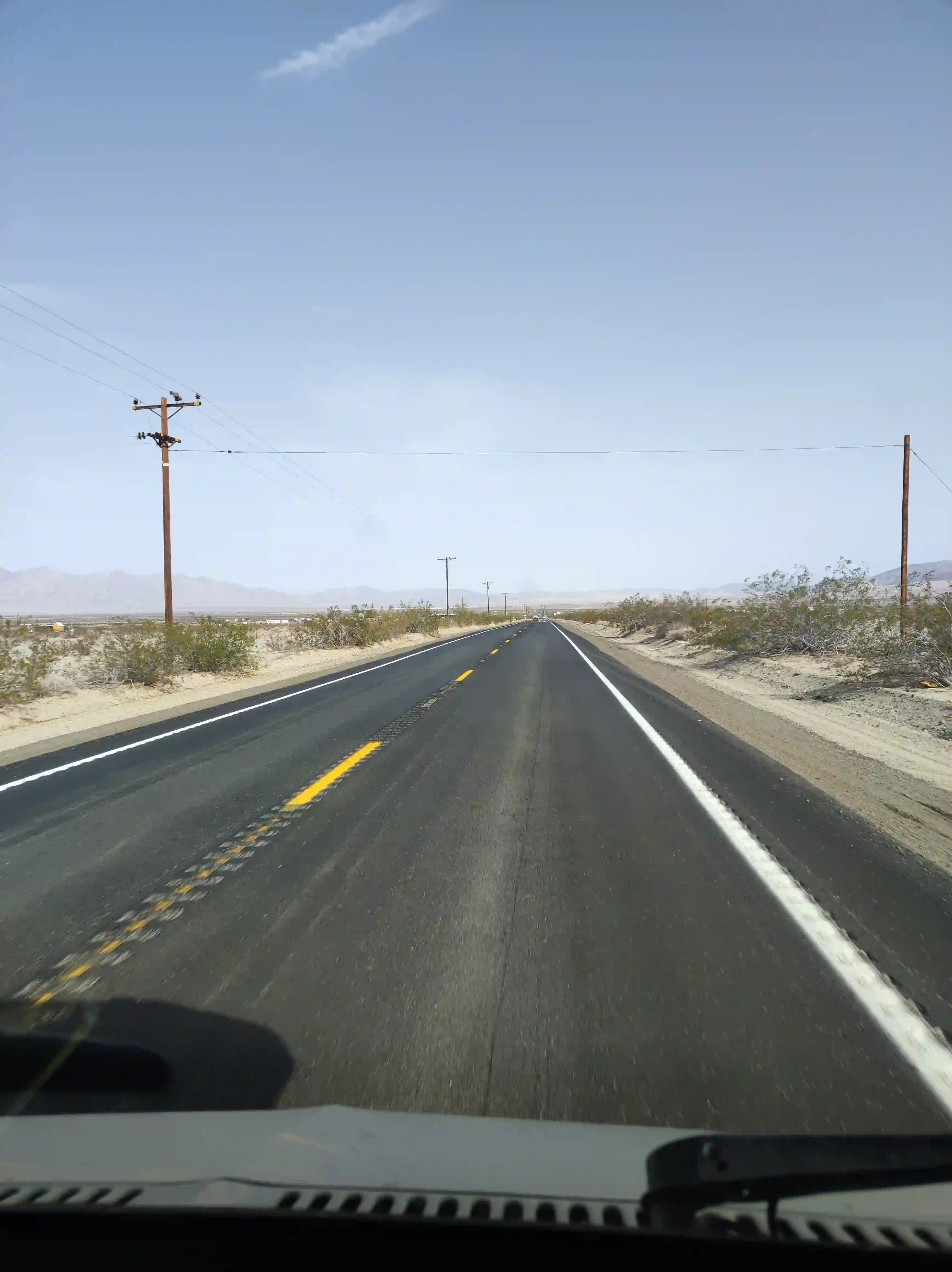
Van life in North America can cost a lot less than most people imagine — or a lot more, depending entirely on how you move, where you park, and what you drive.
In this post, I’m breaking down the real numbers for van life across Canada, the United States, and Mexico, based on my actual time on the road through all three countries. This is the companion post to my Van Life Budget Europe 2026 breakdown — same format, same honesty, different continent.
If you want the full story of the vans I’ve driven across North America — the Warrior, Kerouac, Wild Rose — start on my Memories on Wheels page. This post is just about the numbers.
Let’s break it down.

Menu of This Post
Grocery Budget in North America
Groceries in North America are more expensive than in Europe overall, and the gap in food quality is real — but you can eat well on a budget if you know where to shop.
The van lifer’s best friend on this continent is Walmart. Open 24 hours, everywhere, reliable prices, and — crucially — free overnight parking in most locations. It is genuinely the backbone of budget van life in the USA and Canada in a way that nothing in Europe quite matches.
In the USA, Trader Joe’s is excellent for affordable produce and interesting food if you’re near a city. In Canada, No Frills and Food Basics are the discount equivalents of Lidl. In Mexico, Bodega Aurrerá (the Walmart-owned budget chain) and local markets offer some of the best value on the continent.
North America tip: Unlike Europe, grocery stores here are open on Sundays — sometimes 24 hours, most of the time until 10 or 11 pm. This is a genuine van life convenience. Plan your Walmart stop to also be your overnight parking. One stop, done.
You can budget between $50 and $100 for food depending on your diet and alcohol consumption.
If you eat meat, add this to your weekly total. If you eat out occasionally — which you will, because America’s diner culture is hard to resist and Cracker Barrel has free overnight parking — budget an extra $20 per meal and drink.
And before we continue, I just want to add that all prices are approximate and based on my experience between 2024 and 2026. Fuel prices, campground fees, and exchange rates change constantly, so use these figures as planning estimates rather than exact costs. To make it easier to follow, all prices are also in USD.
Fuel Costs in North America (2026)
This is where North America is dramatically different from Europe. Distances are enormous, gas is sold in gallons not litres, and the price varies wildly between regions.
Approximate Fuel Prices 2026 At Their Worst
| Region | Price Per Litre (approx.) |
|---|---|
| 🇨🇦 Canada | $1.20-1.40 |
| 🇺🇸 USA (national average) | $1.10-1.70 |
| 🇺🇸 Texas (cheapest) | $1.10 |
| 🇺🇸 California (most expensive) | $1.50-1.70 |
| 🇲🇽 Mexico | $1.20-1.50 |
The single most important fuel rule for North America: Texas is where you fill your tank. If you’re heading south in the winter — which is the natural van life migration on this continent — fill up in Texas. The price difference between Texas and California can be significant enough to matter on a van life budget.
Trick #1: Use GasBuddy to find the cheapest stations near you in real time. It’s free, it works everywhere in North America, and it genuinely saves money on a long trip. Sometimes Google Maps shows it too.
Trick #2: Avoid highway gas stations. Same rule as Europe — always more expensive. Take the exit, go two minutes into town, save a few bucks per fill.
Trick #3: Slow travel saves fuel dramatically. Parking for three days in one spot uses zero fuel. This sounds obvious until you realize how much of your budget disappears when you’re moving every single day.
Accommodation: Free Camping vs. Paid
This is where North America genuinely shines compared to Europe, especially if you’re willing to do some research.
Free Options
BLM Land (Bureau of Land Management) — This is the single greatest van life resource in the American West. Millions of acres of public land where you can legally park and camp for free, usually up to 14 days in one spot. The desert states — Arizona, Nevada, Utah, New Mexico, California — are covered in it. The BLM website and the iOverlander app are your tools here.
Walmart overnight parking — Free in most locations across the USA and Canada. You know where your groceries are. You know where the bathrooms are. Not glamorous, but completely functional on a transit night.
Cracker Barrel — Also allows overnight parking in most US locations, and it feels more like a movie set than a truck stop. Win.
National Forest and dispersed camping — Similar to BLM, large areas of national forest land allow free dispersed camping. Check the specific forest rules before parking.
In Canada — Crown land offers similar free camping opportunities for most provinces, though the rules vary. In Québec and BC especially, there’s an enormous amount of accessible public land. Apps like WikiCampers are the Canadian equivalent of Park4Night.
In Mexico: Free camping is widely available and generally accepted — beach spots, roadsides, small towns. The van community is friendly and well-networked.
Paid Options*
| Type | Canada | USA | Mexico |
|---|---|---|---|
| Provincial/State Park | $20-50/night | $20–40/night | Do not apply |
| Private Campground / RV Resort | $50-100/night | $80–130/night | $10-40/night |
| Full hookup (electricity, water) | $70-120/night | Most of times included | Depends if available |
* All prices in USD for convenience.
The America the Beautiful Pass — If you’re planning to visit multiple US National Parks, this pass is essential. $80 per year for US residents, $250 for non-residents (as of 2025 — worth verifying as fees have been changing). After two or three park visits, it pays for itself. I used mine at the Grand Canyon, Joshua Tree, Bryce Canyon, and the Badlands in one trip. More details in my USA Road Trip post.
Reservation rule: For popular national parks in the USA — Zion, Yosemite, Bryce Canyon — book campsites well in advance through recreation.gov. Even in March, Zion was full when we arrived. Don’t wing it on those.

Gas for Cooking & Heating (Propane)
Propane is the standard for van cooking and heating across North America. The good news: it’s widely available and cheaper here than in Europe.
Approximate Propane Costs
| Country | Refill Cost (standard RV tank bottle) |
|---|---|
| 🇨🇦 Canada | $20-30 |
| 🇺🇸 USA | $15-25 |
| 🇲🇽 Mexico | $10-20 |
Canada/USA tip: Walmart, Home Depot, Canadian Tire, and most gas stations sell or exchange propane bottles. It’s one of the easiest things to manage on this continent.
Mexico tip: Propane trucks drive through neighbourhoods playing a jingle — you’ll hear them before you see them. Flag one down. It’s extremely cheap and the whole process takes five minutes.
Heating note: If you’re in Canada or the northern USA during the shoulder season, heating costs add up fast. A diesel heater is a significant upfront investment, but dramatically cheaper to run than propane heating over a full season. Worth it if you’re doing a Canadian spring or fall.
Laundry Costs
Laundromats exist everywhere across North America and are generally affordable.
| Country | Approximate Cost Per Load |
|---|---|
| 🇨🇦 Canada | $8-12 |
| 🇺🇸 USA | $5-10 |
| 🇲🇽 Mexico | $3-8 |
USA/Canada hack: Many Walmarts and truck stops have laundromats attached or nearby. Combine your grocery run with your laundry, and you’ve handled two logistics in one stop.
Mexico hack: Lavanderías (laundry services) are everywhere and incredibly affordable — you drop off your clothes by the kilo and pick them up clean and folded. It’s one of the things I genuinely miss when I leave Mexico.
Unlike in Europe, dryers are standard in North American laundromats. Your clothes will actually be dry when you leave. A genuine quality-of-life win.
Mobile Data & Internet on the Road
Staying connected in North America is a different challenge than in Europe. The continent is enormous, and the beautiful spots often have terrible signal.
For the USA and Canada: A local SIM with a major carrier is often your best bet for coverage. T-Mobile has strong nationwide coverage in the USA including many rural areas. In Canada, Koodo or Public Mobile offer affordable prepaid plans.
For international flexibility across all three countries without swapping SIMs, an eSIM like Holafly covers North America well and lets you activate data digitally as you cross borders.
Starlink: Widely used by North American van lifers, especially in remote areas of the American West and Canada where cell signal disappears entirely. Honest assessment: it works extremely well, it is expensive to subscribe to, and it draws significant power from your electrical setup. If you’re working remotely from off-grid locations, it can be worth it. If you’re mostly near towns and cities, a good SIM plan handles everything at a fraction of the cost.
Free Wi-Fi reality: Libraries across the USA and Canada offer free, fast Wi-Fi — often the best connection in a small town. McDonald’s and Tim Hortons (Canada) are reliable backups. In Mexico, coffee shops and restaurants almost universally offer Wi-Fi and nobody rushes you out.
Activities: National Parks & More
The good news: North America has an enormous amount to do for free.
Hiking, beaches, BLM landscapes, national forests, state parks with day-use areas — the continent is genuinely built for outdoor adventure at no cost.
Where it adds up is in national parks. The America the Beautiful Pass handles the USA side. For Canada, a Parks Canada Discovery Pass works similarly — [$60-120] per year, covering entry to all national parks and historic sites.
Budget for activities:
| Budget Level | Monthly Estimate |
|---|---|
| Free (hiking, BLM, beaches) | $0 |
| Occasional park fees, city days | $20-50 |
| Regular paid activities | Depends! |
Mexico note: Many of Mexico’s best natural attractions — cenotes, beaches, ruins — charge a small entry fee, usually in pesos and very affordable. Budget roughly $25 per week if you’re actively exploring.

Border Crossings & Fees
This section doesn’t exist in the Europe post because Schengen made it irrelevant — but for North America, border crossings are part of the financial reality.
USA ↔ Canada
Straightforward for North Americans. No fee for Canadian or American citizens. For other nationalities, an ESTA (Electronic System for Travel Authorization) is required for US entry — currently $21. Worth double-checking the current requirements before your trip.
USA ↔ Mexico
The temporary vehicle import permit (TIP) is required to bring your van into Mexico beyond the border zone. Cost: approximately $100 plus a deposit that is refunded when you exit. Do not forget to cancel it properly when you leave — the deposit return depends on it.
Tourist card (FMM): Required for stays in Mexico — $30 approximately, sometimes included in your crossing fee.
Pet import (dog): Mexico requires a health certificate and proof of vaccinations. Manageable, but do your research in advance. I’ve crossed with Karma multiple times without issues — the paperwork is more intimidating than the actual crossing. They often don’t even ask for them. The more important is your CDC for the US.
Full breakdown of crossing with a van and a dog is in my USA Road Trip post.

Real Monthly Totals
These are frameworks. Your actual numbers depend on your van, your pace, and your habits. All prices are in USD for convenience and based on lived experiences between 2024 and 2026.
Extreme Budget (Solo, Off-Grid, Slow Travel, USA/Mexico)
Under $500 per month. BLM camping, Walmart overnights, cooking everything yourself, moving slowly to save fuel. This is genuinely doable, especially in the American Southwest and Mexico where free camping is abundant and groceries are cheap.
Mid-Range (Solo or Couple, Mix of Free and Paid Camping)
$500 to $1,000 per month per person. A few paid campground nights per week, occasional restaurant meals, national park visits with the America the Beautiful Pass, a reliable data plan.
Comfort Route (Regular Campgrounds, Full Hookups, Moving Often)
$1,000 to $1,500 per month. Similar to the European luxury bracket — if you’re staying in full-hookup RV resorts regularly and moving frequently, costs climb fast.
The Mexico Advantage
Mexico deserves its own line. It is consistently the cheapest country on this continent for van life. Cheap propane, cheap groceries (if you eat like a local), cheap restaurants and nights out, cheap lavanderías, free beach camping, affordable activities. If your van is legal and your paperwork is in order, you can live extremely well in Mexico for $700 per month or less.
Renting a Van in North America
Not ready to buy? Renting is an option, though the cost structure differs from Europe.
Rental options worth knowing:
- Outdoorsy — peer-to-peer RV and camper van rentals across the USA and Canada
- Cruise America — the classic North American RV rental chain
- Escape Campervans — budget-friendly, one-way options available
- Indie Campers — also operates in North America now
Rough rental range: $80-250 per day, depending on vehicle size and season. For a couple or a group of four splitting costs, this becomes more reasonable for a two to three week trip.
As always, my honest recommendation: if you’re doing more than three weeks, buying and reselling a van beats renting every time. I’ve done it in Mexico and in Canada — both times I came out ahead or broke even on the vehicle itself.
Final Thoughts
Van life in North America nowadays can cost:
- Less than rent in almost every Canadian and American city
- Or as much as a comfortable apartment, if you’re not intentional about it
The continent rewards slow travel. The BLM land, Crown Land, and desert spots in America are the greatest gifts to anyone living on the road. Mexico is one of the most underrated van life destinations on Earth. And Canada — once you accept the long distances and the fuel costs — has landscapes that justify every litre.
The range is real: you can do this for under $400 a month in Mexico, or spend $1,500 moving fast through California in summer. Both are van life. Only you know which one is yours.
Let’s hit the road.
Keep Reading
- Van Life Budget Europe 2026: Real Monthly Costs
- USA Road Trip: 5 Months of Van Life from New York to the Wild West
- Van Life in Morocco: Complete Road Trip Guide

Don't be shy!